
Investigating the ruminal metagenome of grass and forage-fed bison to uncover metabolic activities that impact the efficiency of plant fiber utilization
Principle Investigators
Dr. Benoit St-Pierre, South Dakota State University
Dr. Carter Kruse, Turner Institute of Ecoagriculture
Graduate Student
Anlly Miley Fresno Rueda, PhD candidate
Rationale.
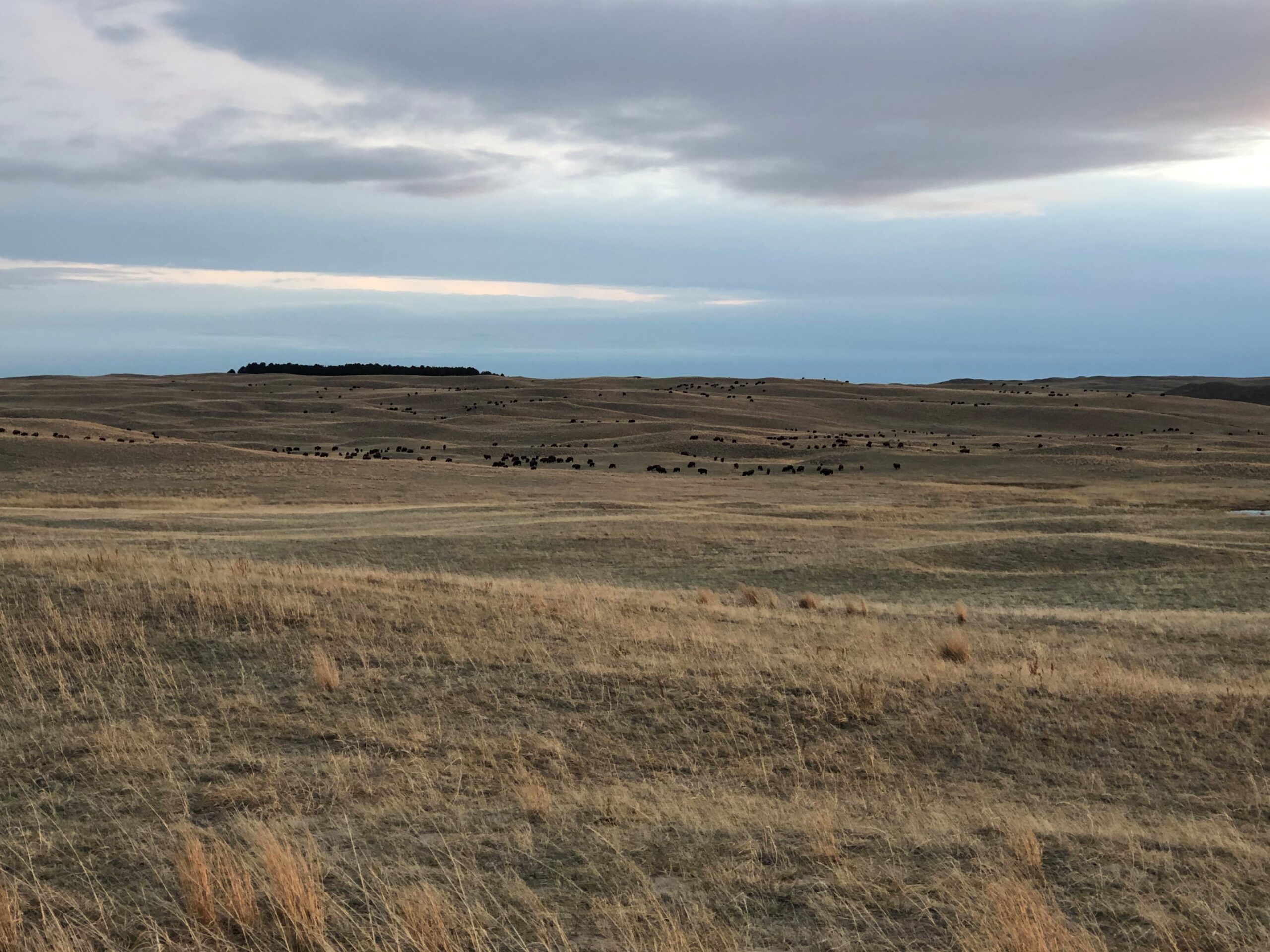
Rationale. Bison appear to have the ability to maintain condition better than domestic grazers on forage of poor quality. Since they are responsible for digesting feed, rumen symbiotic microorganisms in bison may be capable of extracting more energy out of plant fibers. Consistent with this hypothesis, the Institute has determined that rumen bacterial species from bison are very different from their counterparts in domestic grazers, suggesting that they may be more metabolically efficient. In this context, this research investigates the ruminal microbiome of American plains bison to uncover the metabolic activities that enable efficient utilization of plant fiber, with a particular focus on bacterial composition and functional capabilities in response to forage quality. Gaining a deeper understanding of how rumen bacteria from bison are utilizing feed is a necessary first step in better understanding bison digestive physiology and ultimately developing innovative strategies to improve bison production and developing useful feed and mineral supplements.
Outcomes.
Outcomes. Using high-throughput sequencing and metagenomic assembly, this study identified bacterial coding sequences and key enzymes involved in the breakdown of structural polysaccharides such as cellulose, hemicellulose, and starch into simpler sugars. These sugars are metabolized via glycolysis and other pathways, producing short-chain fatty acids,which are critical energy sources for bison. Pathways for the biosynthesis of essential amino acids and vitamins are also highlighted, further demonstrating the rumen bacteria’s role in meeting the host’s nutritional demands on fibrous forage. The study found significant shifts in bacterial communities depending on diet quality, with higher diversity observed when on good-quality forage. For example, taxonomic analysis identified the prevalence of cellulolytic bacteria such as Ruminococcus and Fibrobacter in both dietary conditions, but their abundance decreases with lower forage quality,highlighting functional adaptations to low-nutrient conditions. These results emphasize the metabolic versatility of bison rumen bacteria, enabling nutrient extraction from low-quality forage and supporting host energy requirements under challenging dietary conditions. For a more complete summary,please see the following:
Rueda, A.F. 2025. Investigating the ruminal metagenome of grass- and forage-fed bison to uncover metabolic activities that impact the efficiency of plant fiber utilization. PhD Dissertation. South Dakota State University. https://openprairie.sdstate.edu/etd2/1546/