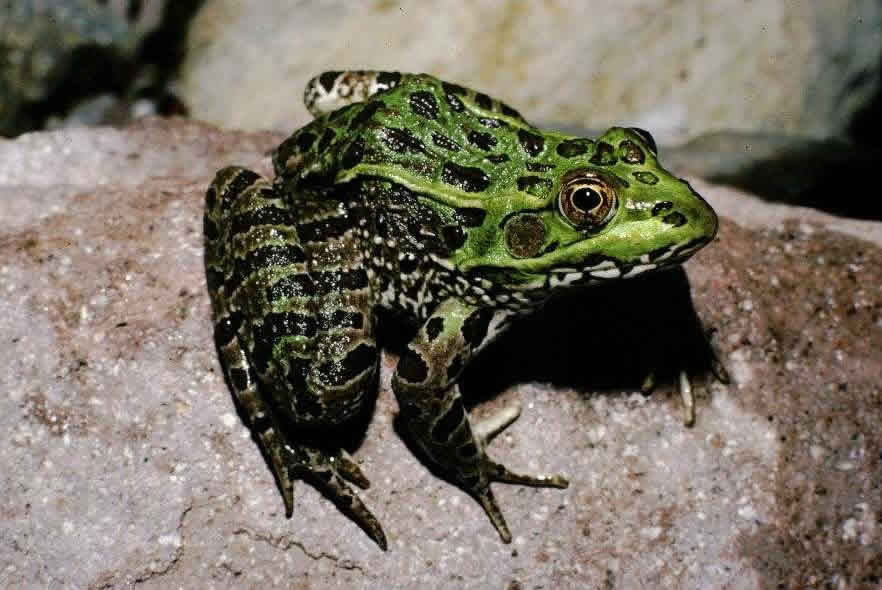
Assessing outbreeding depression risk to Chiricahua leopard frog recovery
Principle Investigators
Jacob Williams, Turner Institute of Ecoagriculture
Cassidi Cobos, Turner Institute of Ecoagriculture
Dr. Rob Denton, Ball State University
Dr. Jamie Voyles, University of Nevada - Reno
Audrey Owens, Arizona Game and Fish Department
Rationale.
This project will provide the first comprehensive, empirically driven assessment of outbreeding depression risk in the federally threatened Chiricahua leopard frog, a threatened species still harboring substantial genetic diversity across its range. Controlled crosses among frog populations that span a spectrum of genetic divergence, from closely related to distantly related, will be used to identify thresholds at which fitness declines may occur. Key indicators of developmental success (e.g., survival, growth rates, developmental timing) in offspring will be measured. Juveniles from successful crosses will be introduced into suitable wild sites with population dynamics and genetic changes monitoredover time, employing both capture-mark-recapture methods and genomic analyses. Potential differences in disease tolerance among crosses will be determinedby measuring susceptibility to the fungal pathogen Batrachochytrium dendrobatidis. Together, these approaches will clarify how genetic distance influences outbreeding depression and pathogen resistance, helping to shape best practices for genetic rescue in declining populations. While genetic rescue has been increasingly promoted as an underused conservation strategy, its broad implementation has been limited by fears of outbreeding depression and uncertainty surrounding thresholds of genetic differentiation. These concerns have remained difficult to address due to the inherent difficulty in gathering the necessary experimental evidence in wildlife that is already endangered enough to require genetic rescue. By integrating intensive breeding trials with genomic analyses, long-term population monitoring, and pathogenchallenge experiments, this project will yield fundamental insights into how gene flow shapes population viability and disease tolerance.