Understanding individual catchability and post-release mortality to assess population level angling impacts on trout in montana
Principle Investigators
Dr. Christopher Guy, Montana State University
Jacob Williams, Turner Institute of Ecoagriculture
Dr. Carter Kruse, Turner Institute of Ecoagriculture
Graduate Student
Max Rubino, PhD candidate
Rationale.
Montana supports some of the nation’s best known and highest quality rainbow and
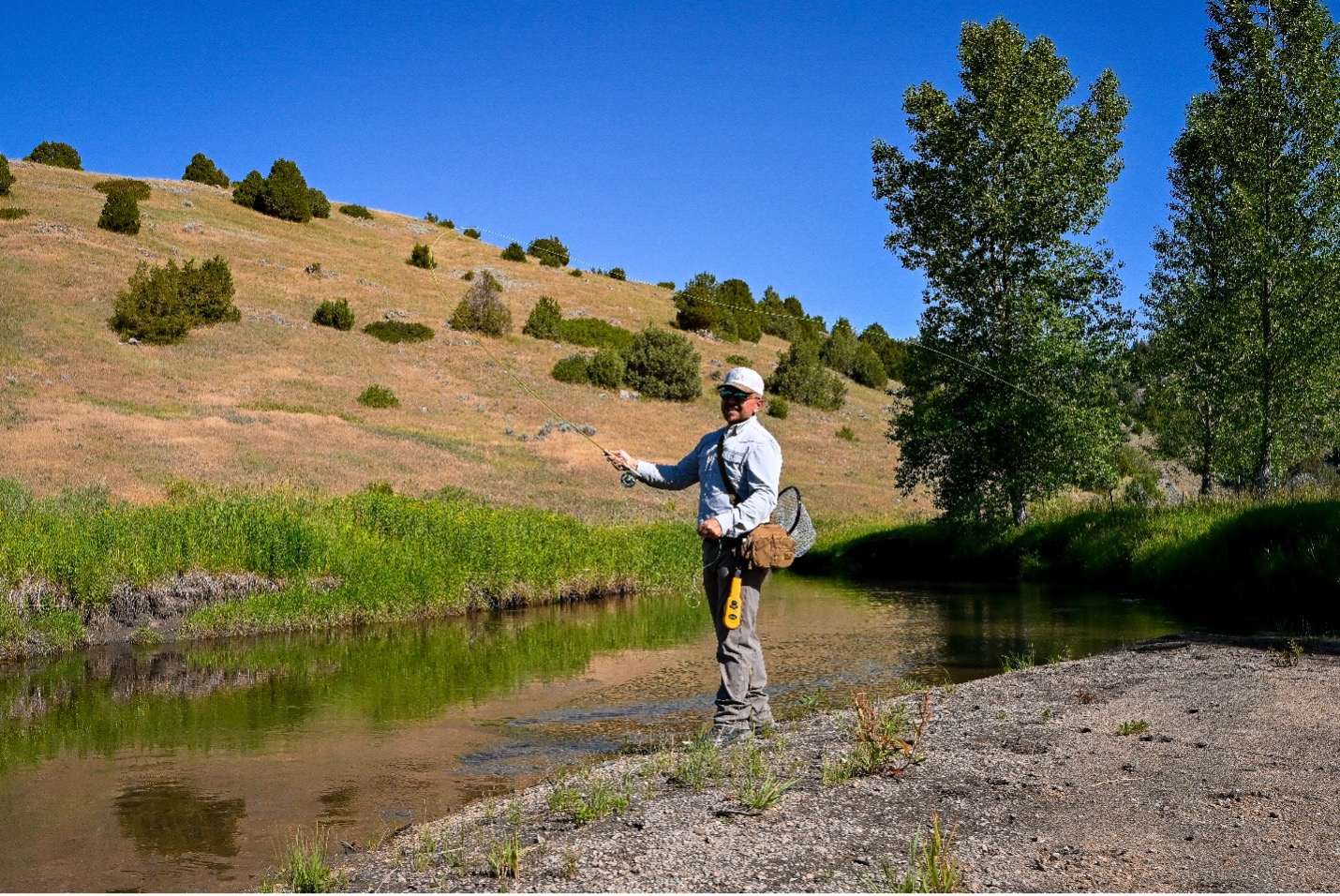
brown trout fisheries. The Beaverhead, Ruby, Big Hole, and Madison rivers are among the most highly regarded and popular trout fisheries in Montana. However, trout abundances in all four rivers are near record lows, threatening local and state economies. These trends have triggered new regulatory measures including reduced season lengths, gear restrictions, and tighter creel limits. However, these interventions have been largely reactive, and without a clearer understanding of the mechanisms driving trout population declines, long-term recovery remains uncertain. This project seeks to address critical knowledge gaps in fish population dynamics that underpin effective fisheries management. Specifically, the study will investigate three fundamental questions: (1) Does vulnerability to angling vary among individual trout; (2) Do repeated captures from angling contribute to increased post-release mortality; and (3) Is fishing mortality primarily additive or compensatory at the population level? These questions are particularly urgent in the context of Montana’s high-use, wild trout rivers, where catch-and-release angling is common and cumulative angling pressure may impose unforeseen demographic consequences. To answer these questions, a controlled experimental setting is required—one where individual fish can be tracked through time, cumulative capture histories recorded, and mortality directly observed. Streams that are smaller in size, have intact habitat, and controlled access are essential for this project. The Flying D Ranch presents an ideal setting for such a study. Cherry Creek and Spanish Creek systems will serve as experimental analogs to larger rivers, offering the ability to monitor tagged fish with high detection probabilities while still simulating realistic angling conditions. By clarifying how angling pressure influences trout populations, this research will inform the design of more effective and adaptive management strategies for Montana’s premier fisheries. It will also generate site-specific insights to guide long-term fisheries management on the Flying D Ranch and other Turner properties, improving ecological outcomes while maintaining recreational value. In a broader context, this work will contribute to the growing body of literature on the demographic effects of recreational fishing and inform best practices across the western United States.