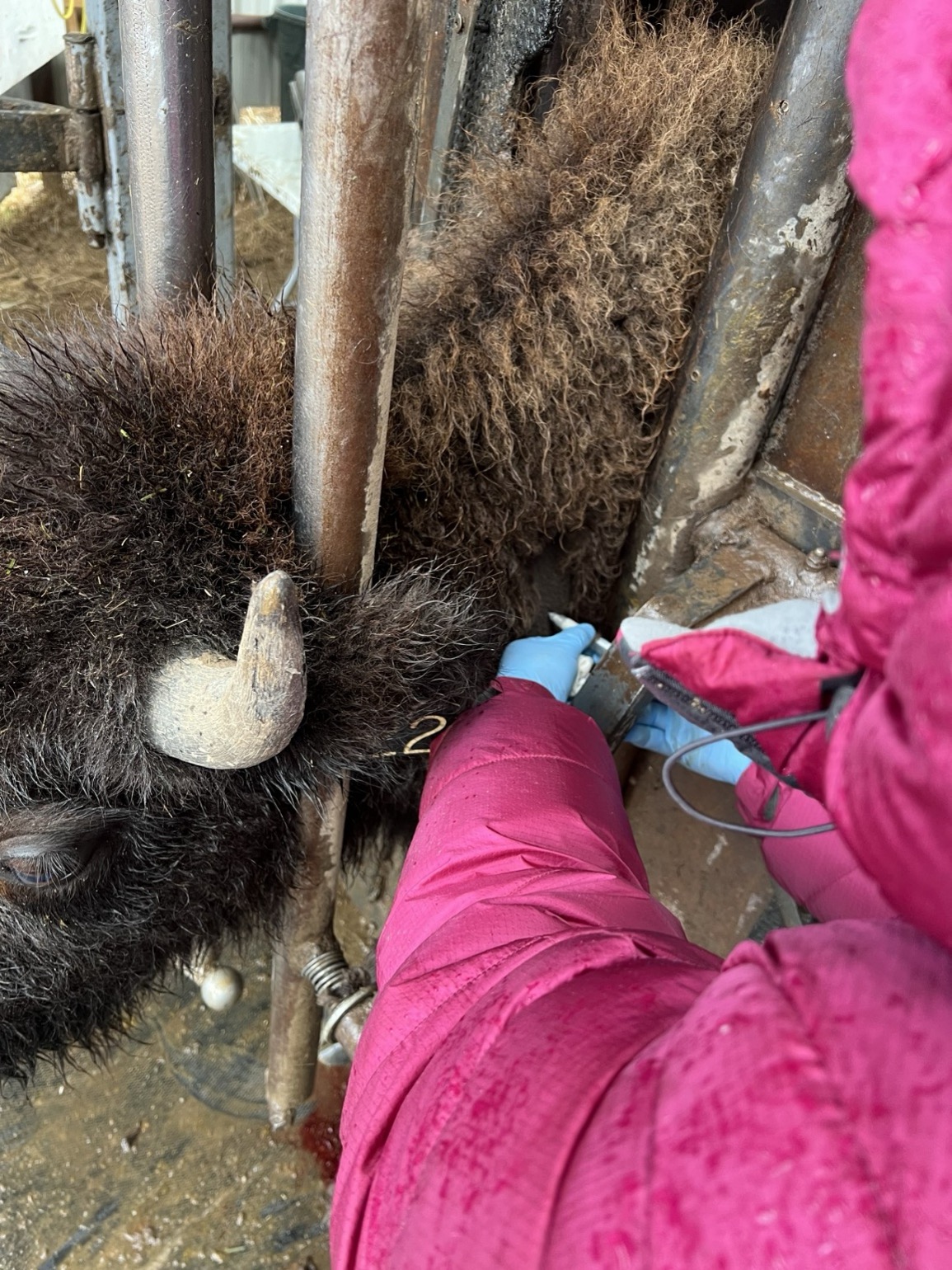
Effectiveness of SpayVac-pZP or -GnRH in preventing pregnancy in bison cows
Principle Investigators
Dr. Tom Bragg, Turner Institute of Ecoagriculture
Dr. Ursula Bechert, SpayVac for Wildlife, Inc.
Dr. Carter Kruse, Turner Institute of Ecoagriculture
Rationale.
Female bison will generally reach sexual maturity and breed when they are two years of age. Grass finishing of bison femalesrequires maintaining individuals on range until they are 30-42 months of age; well past sexual maturity. The Institute typically keeps a portion of female bison that are destined for grass markets in separate herds away from breeding bulls to prevent unwanted pregnancies in market animals. However, managing multiple, separate herds can complicate grazing planning and potentially impact range conditions. Thus, a treatment that preventspregnancies in females exposed to bulls could be a useful management tool for bison producers. Because many bison are marketed as hormone–free meat, hormone-based contraceptive methods, like synthetic progestins, are not an option.Surgical treatments, like removing the ovaries, may be socially unacceptable andcan beoverly stressful on bison and lead to hemorrhaging and infection.Porcine zona pellucida (pZP)– and gonadotropin-releasing hormone (GnRH)-basedcontraceptive vaccines have shown promise in preventing pregnancies in overabundant wildlife populations such as white-tail deer and wild horses, as well asother species, including bison.However, booster doses are usually required. Unlike current vaccines on the market, SpayVacprovides single-dose, long-lasting contraceptive for a variety of species whichmay be effective for 2-5 years in bison; likely long enough to prevent pregnancies in female market bison. This Institute project will compare the effectiveness of both pZP– and GnRH-basedSpayVacvaccinesto a control group in preventing pregnancies in young female bison for at least two yearsand document any potential side effects.