
BLUE CREEK
85,635 Acres | Nebraska Sandhills
A living laboratory where native grasslands, groundwater, bison, and prairie wildlife demonstrate the resilience of one of North America’s most iconic grassland landscapes.


WHERE TWO PRAIRIES MEET
Some of the most resilient landscapes are found where ecosystems meet
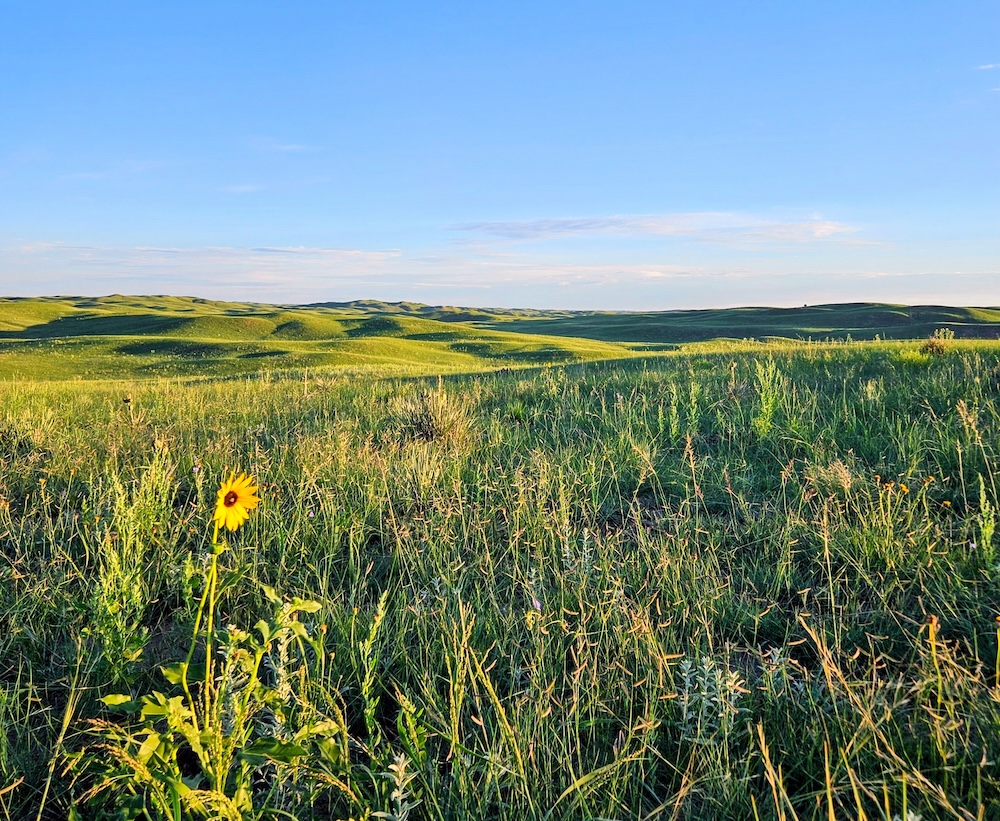
Blue Creek sits along the southwestern edge of Nebraska’s Sandhills, one of the largest grass-stabilized dune systems in the world. Here, rolling sandhills meet the clay soils and hard-grass prairies of western Nebraska, creating a unique transition zone where two distinct grassland ecosystems converge.
This ecological diversity supports a wide range of native plants and wildlife while providing an ideal landscape for studying grassland health, grazing systems, and long-term stewardship.
WATER BENEATH THE GRASSLANDS
The story of Blue Creek
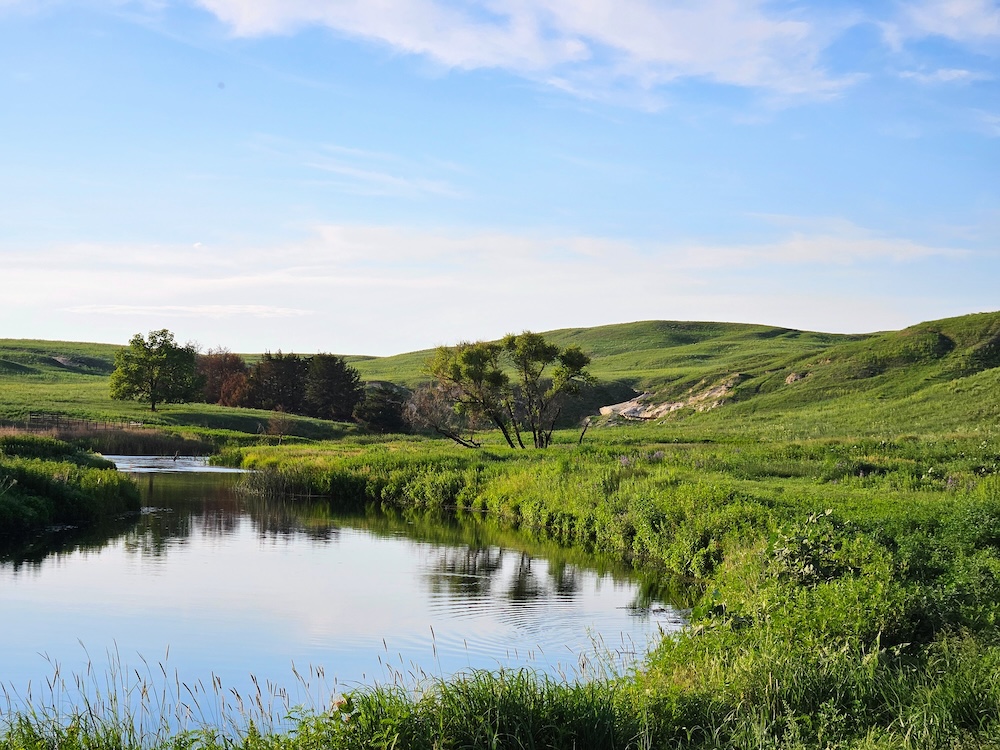
Water shapes life across the Great Plains, and Blue Creek is at the center of this landscape. Flowing through the southern half of the property, the creek serves as an important tributary of the North Platte River while supporting wildlife, native vegetation, and ranch operations.
The property is also home to Gusher Springs, believed to be the second-largest natural spring in Nebraska. Emerging from deep underground aquifers, the spring flows at approximately 3,750 gallons per minute, providing a powerful reminder of the hidden water systems that sustain the Sandhills ecosystem.
BISON & GRASSLAND STEWARDSHIP
Working with native systems
Blue Creek supports more than 5,000 bison managed across native rangelands. As the original grazers of the Great Plains, bison help shape grassland ecosystems through their movement, grazing patterns, and interaction with the landscape.
Stewardship efforts focus on maintaining healthy soils, productive grasslands, and resilient ecosystems while supporting sustainable agricultural operations. Solar-powered stock wells provide a portion of the water needed for the herd, helping reduce infrastructure impacts while supporting efficient resource management.

A LANDSCAPE TRANSFORMED BY FIRE
The 2026 Blue Creek wildfire
In spring 2026, a catastrophic wildfire swept across Blue Creek as part of a much larger fire that burned approximately 350,000 acres in western Nebraska. Driven by extremely dry conditions and powerful winds, the fire burned across nearly the entire property.
Through the extraordinary efforts of the Blue Creek team and ranch crews from across Nebraska, all buildings and animals were saved. No human injuries were reported.
The fire dramatically changed the visible landscape, but it did not end its ecological story. Native prairie evolved with disturbance, and the months and years ahead will reveal how soils, vegetation, water systems, wildlife, and grazing patterns respond.
A LIVING LABORATORY FOR RECOVERY
Ecological recovery across working landscapes
The 2026 wildfire creates an uncommon opportunity to study ecological recovery across an entire working landscape. Blue Creek can help researchers and land managers examine how different prairie systems respond to the same disturbance, including the Sandhills north of the creek and the mixed-grass prairie to the south.
The lessons learned at Blue Creek may help inform fire preparedness, post-fire management, grazing decisions, and grassland restoration across the Great Plains.
WILDLIFE OF THE PRAIRIE
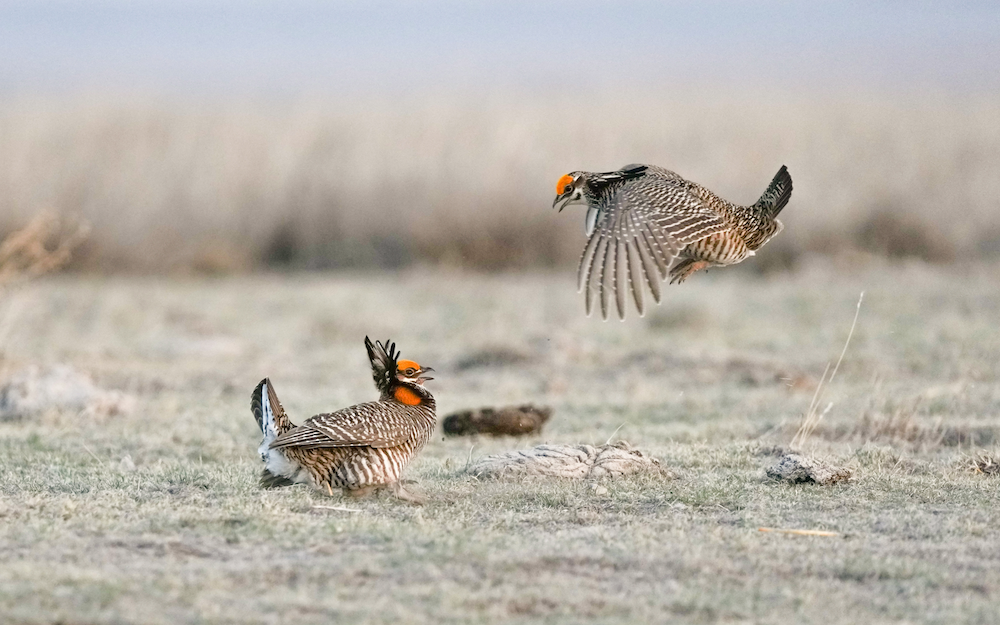
Blue Creek provides habitat for an abundance of native wildlife, including mule deer, white-tailed deer, pronghorn, prairie chickens, sharp-tailed grouse, wild turkeys, ring-necked pheasants, waterfowl, and countless smaller species.
As vegetation returns, continued observation can help reveal how wildlife responds to changing cover, forage, water access, and habitat structure. Some species may quickly use newly opened areas, while others will depend on surviving pockets of vegetation and nearby unburned habitat.
Many of these animals depend on healthy grasslands, wetlands, and connected habitat. Maintaining these ecosystems benefits not only wildlife but also the long-term resilience of the prairie itself.
THE ENDURING PRAIRIE
The Nebraska Sandhills remain one of North America’s most remarkable grassland landscapes. At Blue Creek, stewardship is guided by a simple idea: healthy land supports healthy wildlife, sustainable agriculture, and thriving communities.
By protecting native prairie, conserving water resources, and working with natural processes, Blue Creek helps ensure that this landscape remains resilient for generations to come.