
DEER CREEK
76,183 Acres | Northwestern Nebraska
A living laboratory where two of the Great Plains’ most important ecosystems meet, creating a diverse landscape that supports wildlife, resilience, and ecological discovery.


WHERE TWO WORLDS MEET
Some of nature’s richest landscapes are found where ecosystems overlap.
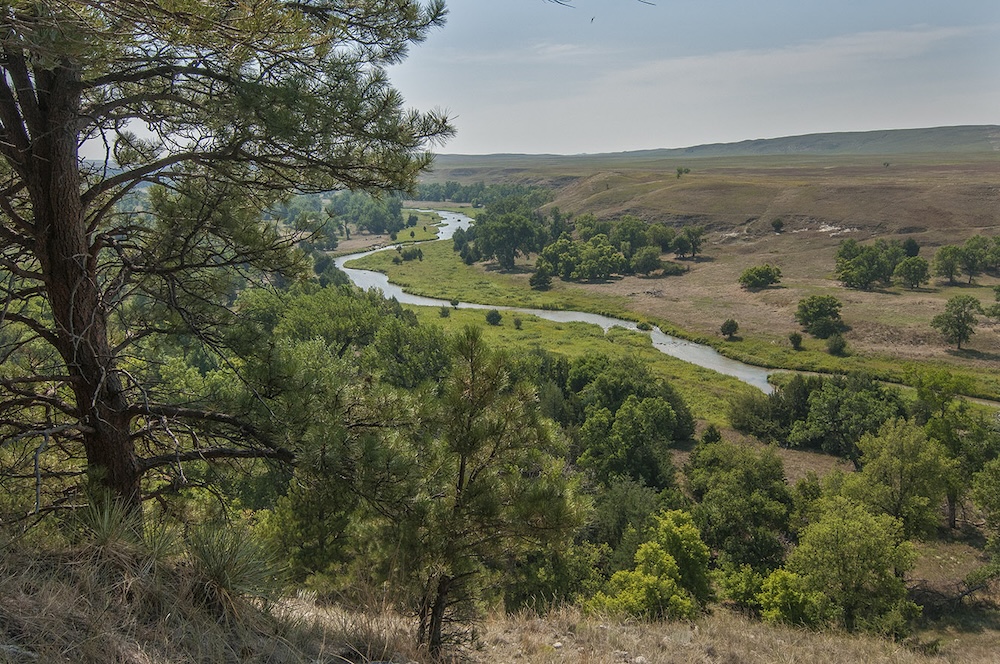
Deer Creek sits at the intersection of two distinct Great Plains ecosystems. The southern portion of the property lies within Nebraska’s iconic Sandhills, where rolling dunes are stabilized by native prairie grasses and groundwater-fed systems. To the north, mixed-grass prairie dominates the landscape, characterized by rolling hills and sandy loam soils.
Between these regions lies a broad transition zone where the characteristics of both ecosystems blend together. This meeting place creates a rich and dynamic landscape that supports exceptional ecological diversity.

A LANDSCAPE OF DIVERSITY
The story of Deer Creek
The variety of habitats found across Deer Creek supports an abundance of native wildlife. Grasslands, transition zones, and seasonal wetlands provide food, cover, and nesting habitat for species that depend on healthy prairie ecosystems.
The interaction between Sandhills prairie and mixed-grass prairie creates opportunities for species from both ecosystems to thrive, contributing to the biological richness of the region.
WILDLIFE OF THE GREAT PLAINS
Healthy grasslands provide habitat for wildlife at every scale
Deer Creek supports a remarkable variety of wildlife, including mule deer, white-tailed deer, elk, wild turkeys, pheasants, sharp-tailed grouse, and sandhill cranes. The property also provides habitat for long-billed curlews, waterfowl, nesting swans, bald eagles, and many other bird species.
These species depend on large, connected grassland landscapes that remain increasingly rare across North America. Maintaining habitat diversity helps support wildlife throughout the year and across multiple life stages.
BISON & PRAIRIE STEWARDSHIP
Conserving Yellowstone genetics
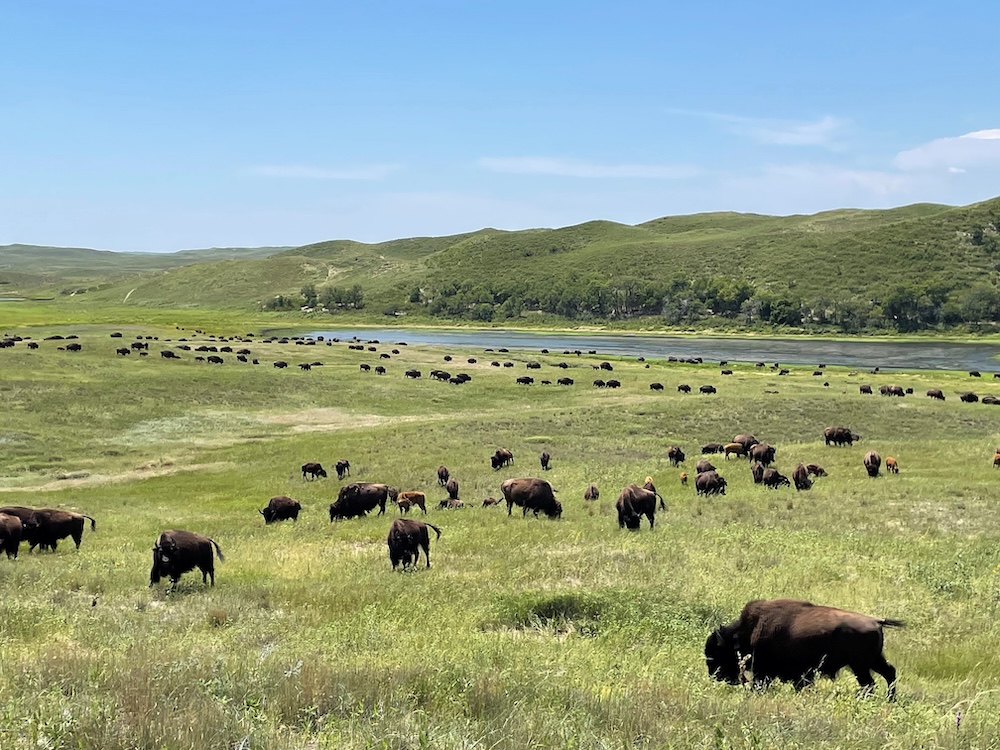
Bison are both an important part of Deer Creek’s prairie ecosystem and the focus of ongoing conservation research. The property is home to a special herd descended from Yellowstone National Park bison, established to preserve valuable Yellowstone genetics in a brucellosis-free conservation herd. The herd was relocated to Deer Creek in 2019 after several years at Flying D.
Today, the Turner Institute and Texas A&M University are using genetic analysis to understand how well the Deer Creek herd represents the genetic diversity of Yellowstone bison and to guide its long-term management. Results show that the herd has retained 95.76% of Yellowstone’s genetic heterozygosity, providing an important example of how science, animal management, and working landscapes can contribute to native species conservation.
SCIENCE IN ACTION
From genetics to grasslands
Because Deer Creek contains multiple ecosystems within a single landscape, it offers valuable opportunities to better understand how plant communities, wildlife populations, and ecological processes respond to changing environmental conditions.
Studying these transition zones can help scientists and land managers better understand resilience, biodiversity, habitat connectivity, and the long-term health of Great Plains ecosystems.
A LIVING LABORATORY FOR RESILIENCE
Deer Creek brings together two powerful forms of diversity: the ecological diversity created where two Great Plains ecosystems meet and the genetic diversity preserved within its Yellowstone-origin bison herd.
As part of the Turner Institute’s network of Living Laboratories, Deer Creek provides a place to ask how diversity, from genes to landscapes, can strengthen resilience. What we learn here can help inform the future management of bison, grasslands, wildlife habitat, and working lands across the Great Plains.